Christ Church, Clifton
Behold, a Zimbelstern. The star has mounted bells which ring as it rotates. They were particularly common in Germany in the 15th to 18th centuries.
I emailed Christ Church in Clifton on the off-chance and the buildings manager replied very quickly, saying that the organ also had a Zimbelstern. I went straight into the living room and found my Encylopedia Britannica xyz edition, but there was no mention of such a thing, so I went to Bristol Central Library to look further but couldn’t find anything there either. As it was obviously a German word, I decided to continue my search in Vienna, so I got on a plane and went straight to the Österreichische Nationalbibliothek. Eventually in the Z section (which is much larger than British Z sections, with ‘z’ making up 1.3% of all German letters compared with 0.06% in English) I found all the books about Zimbelsterns. The thought of playing an organ with such tinkly interestingness going on filled me with great excitement, so I went straight back to Bristol and arranged a visit with the buildings manager. For future reference, if you want to look them up in your English encyclopedias, look under C for Cymbelstern.
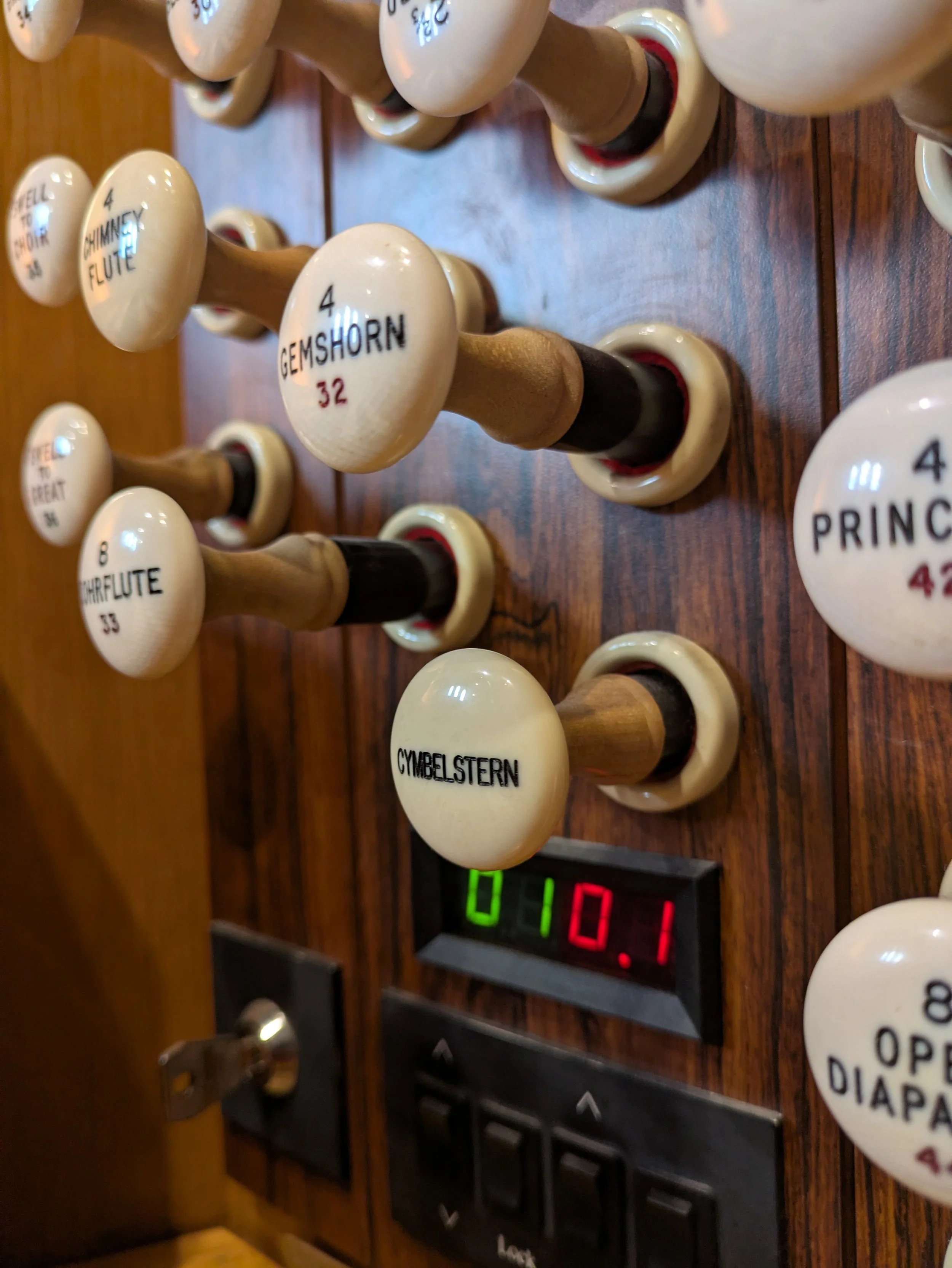
I love the names of all the pipes!
You can see a full itemised list of the Christ Church organ pipes here.
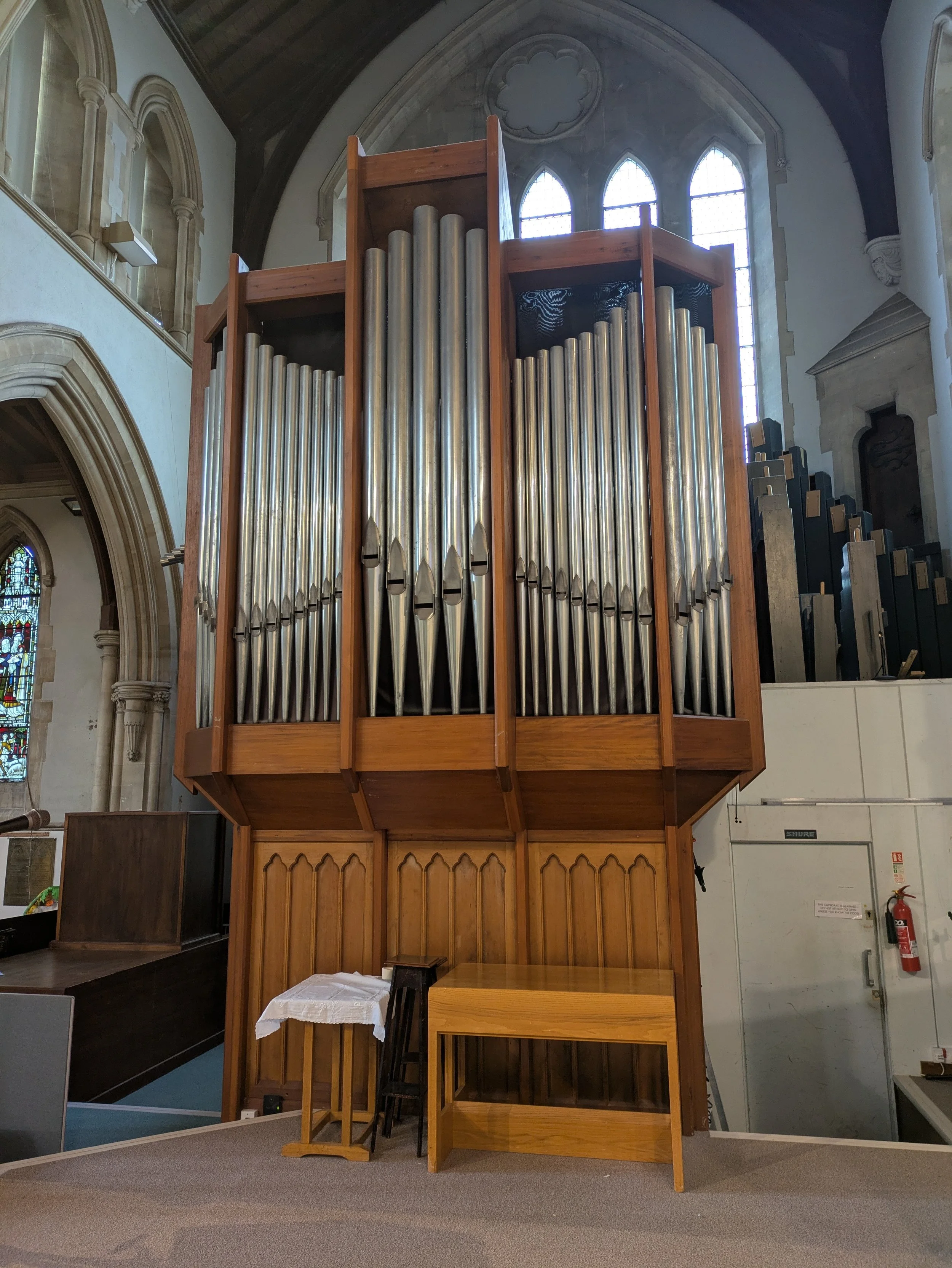
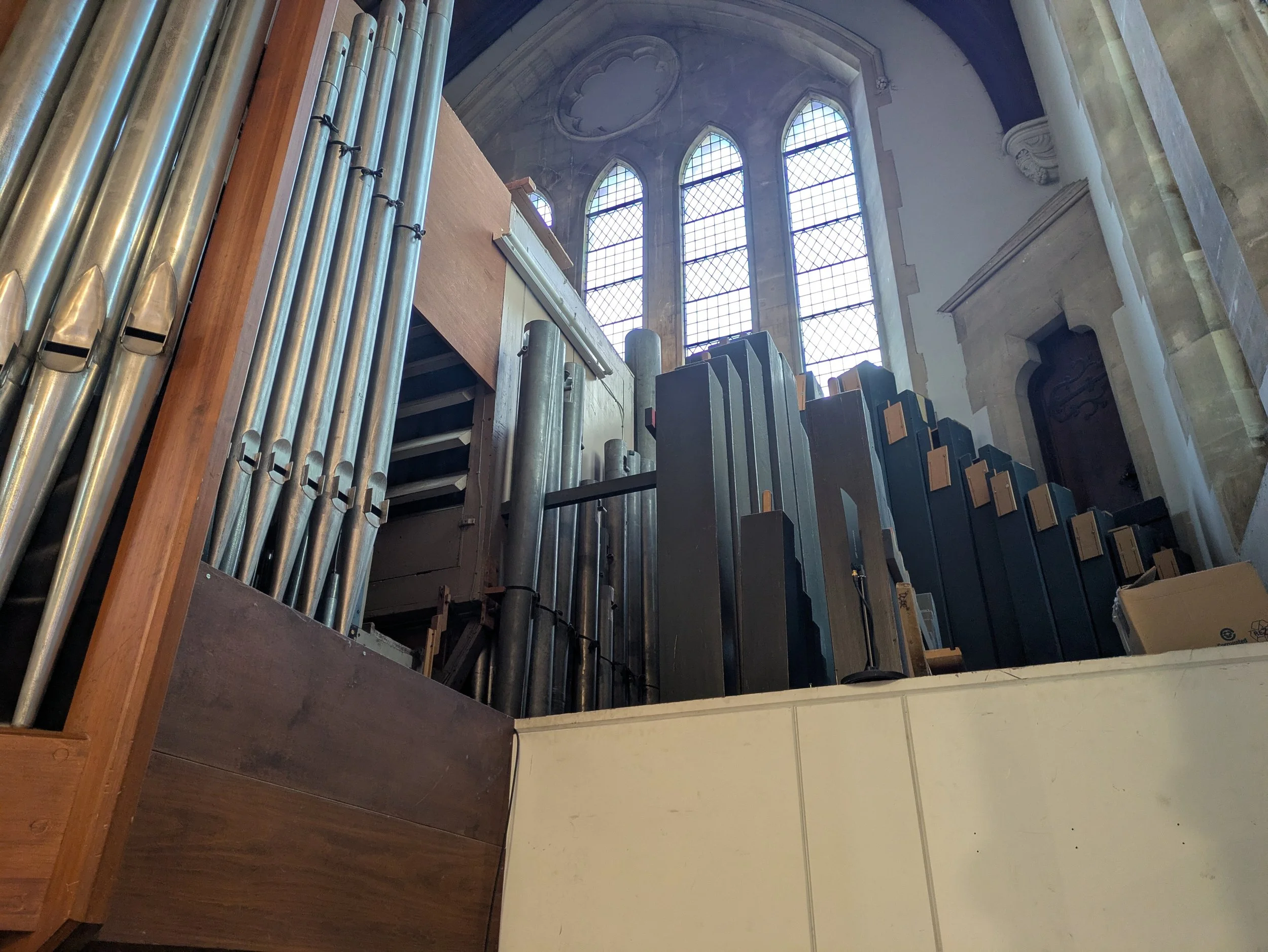
The organ itself was made by Walker & Sons in 1846, and is incredibly beautiful. It’s always a pleasure to sit facing pipes from a distant console, though you have to get used to the slight delay between pressing a key and the organ sounding. Obviously, I pulled out the stop marked Cymbelstern straight away, and hopefully didn’t drive the buildings manager mad with its repeating 7 note modal tinkle. The notes you can hear in the video are C, D, E, F, G, A and Bb, making it a mixolyidan mode in C. This is one of the medieval church modes, and also characteristic of rock music, found in Wild Thing by the Troggs, to name but one really rocky example in a million other rock songs. I’ve only since found this out while writing right now. If I could go back, it would be nice to play an improvisation in C mixolydian to go with the Cymbelstern. Other compatible keys would be F major, C minor, or the C blues scale. It’s interesting to think how this scale is associated with both blues spiritual and medieval spiritual, as if the mode’s expression of spirituality is deep and runs through the world from west Africa to northern Europe and the USA.
Annoyingly, I forgot to press record on the recorder and missed the first half hour of improvising, I think possibly because I was so excited to start playing. However, I was happy with what I eventually managed to record here.
Thank you very much to the church buildings manager for your time and Zimbelstern resilience!
